HUB.02 / RESEARCH
The published evidence graph for CJC-1295.
Twenty findings across mechanism, Phase 1 pharmacokinetics, preserved pulsatility, the terminated Phase 2 program, and the analytical literature.
What the literature says, in brief
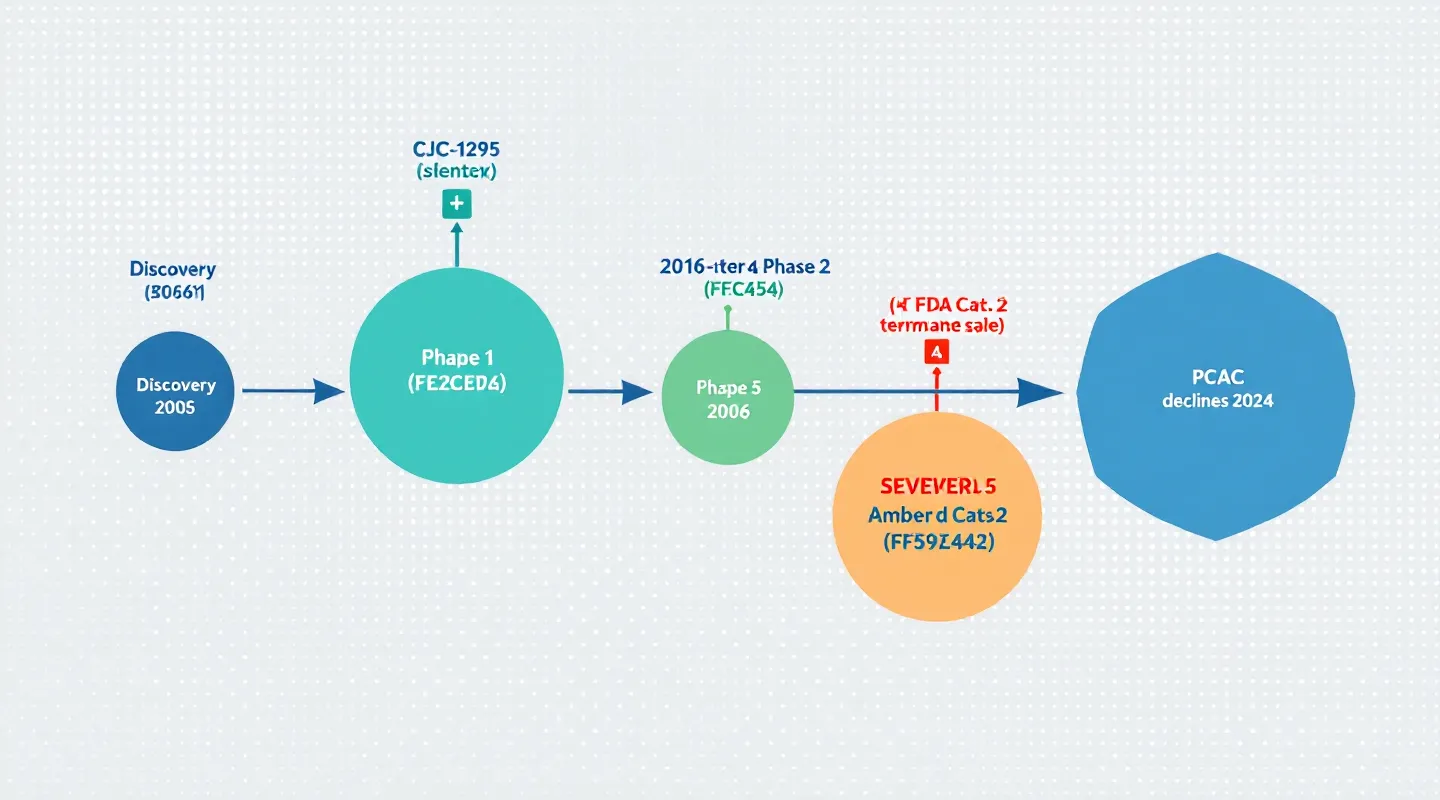
The published record on CJC-1295 is small and tractable. Its core is two Phase 1 trials in healthy adults — both from 2006 — that established the pharmacokinetics, documented GH and IGF-1 elevations, and showed that normal pulsatile GH secretion is preserved under sustained GHRH-analog stimulation [2][3]. A single preclinical paper rescued growth-deficient mice with once-daily dosing [4]. A Phase 2 program in HIV-associated visceral fat was discontinued without completing its endpoints [11].
Around that clinical core sits an analytical literature driven largely by anti-doping authorities: immunoaffinity screens, LC-MS/MS confirmatory methods, and more recent antibody-free urinary assays, all needed because the albumin-conjugated circulating form of CJC-1295 defeats standard peptide detection workflows [6][7][8][9]. A 2024 FDA advisory committee reviewed the compound and cited safety and immunogenicity concerns when it declined to recommend it for the 503A compounding list [22].
The research page below renders each of these findings as a node in a connected graph. Mechanism feeds into pharmacokinetics, which feeds into trial design, which feeds into the regulatory status, which feeds into the detection literature. Edges matter here as much as nodes.
Mechanism — GHRH-receptor agonism on a long carrier
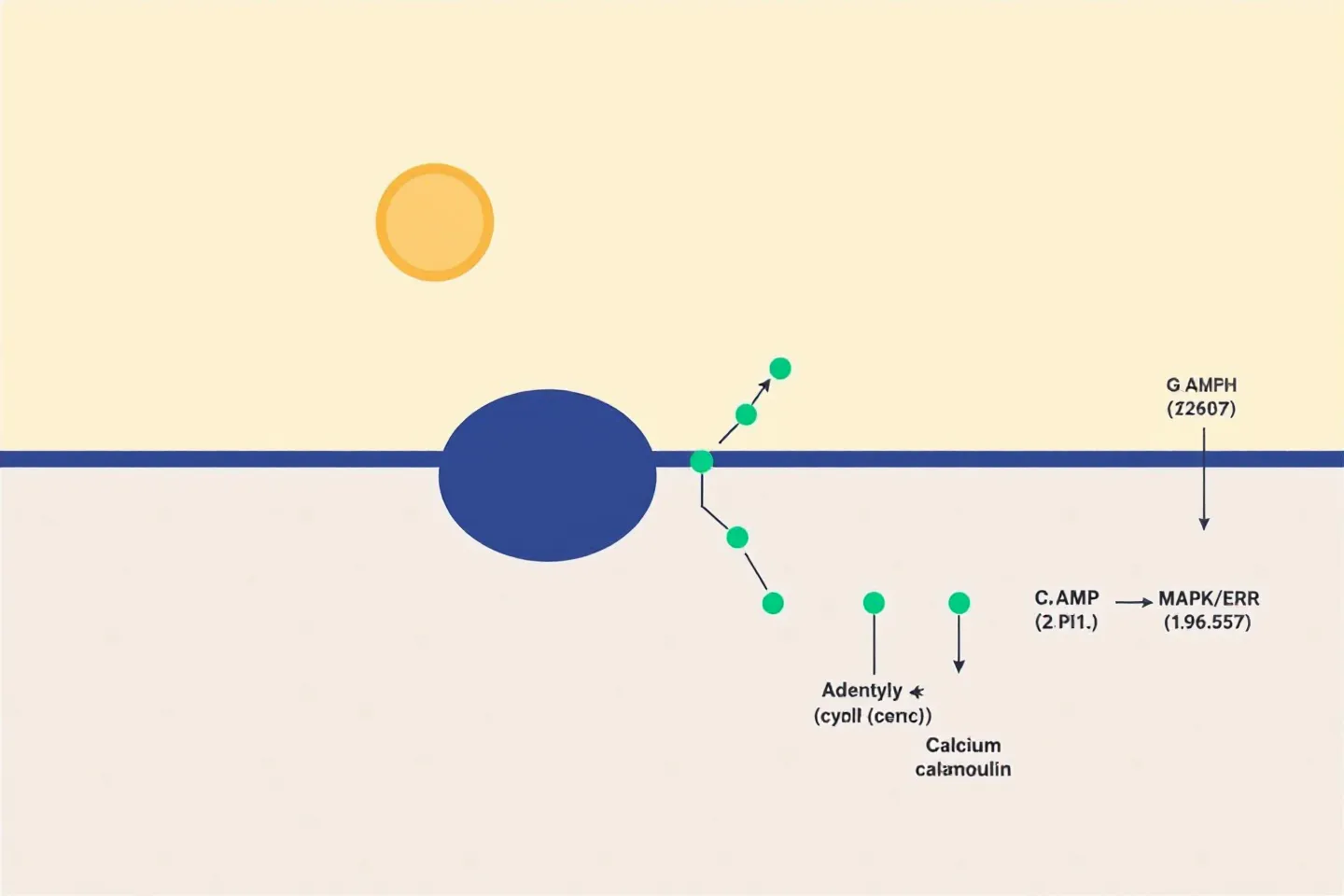
CJC-1295 binds the growth-hormone-releasing-hormone receptor (GHRH-R), a class B G-protein-coupled receptor expressed on anterior-pituitary somatotrophs. Receptor occupancy activates Gs alpha, which couples to adenylyl cyclase, raises intracellular cyclic AMP, activates protein kinase A, and phosphorylates CREB — the canonical cAMP/PKA/CREB cascade. Downstream of CREB, Pit-1 transcription rises, GH gene transcription is induced, and stored GH is released by exocytosis from somatotroph secretory granules [15]. Secondary signaling through MAPK/ERK and calcium/calmodulin pathways mediates somatotroph proliferation, which is why GHRH-knockout mice receiving once-daily CJC-1295 show somatotroph hyperplasia alongside normalized GH/IGF-1 output [4] [15].
The mechanistic distinction between CJC-1295 and earlier GHRH analogs is not the receptor binding — it is the residence time on the receptor's substrate pool. Free GHRH(1-29) is cleared from plasma in minutes by DPP-4 and renal filtration. CJC-1295, covalently linked to albumin Cys34 via its maleimide handle, is preserved across days [1] [2] [16]. The pituitary thus sees a continuously replenished ligand pool rather than a brief bolus.
Pharmacokinetics — the 5.8 to 8.1 day half-life
The pivotal Phase 1 trial (Teichman 2006) administered single subcutaneous CJC-1295 doses of 30, 60, 125, and 250 microgram per kilogram to healthy adult volunteers, then multiple-dose 60 microgram per kilogram weekly for 28 to 49 days [2]. Plasma GH rose two- to tenfold and remained elevated for six or more days after a single dose. IGF-1 rose 1.5- to threefold and remained elevated for nine to eleven days. The estimated plasma half-life was 5.8 to 8.1 days. With weekly dosing, cumulative IGF-1 elevation lasted approximately 28 days [2].
The half-life is the dominant pharmacokinetic feature of the compound. Within the broader GHRH-analog class, native sermorelin clears with a plasma half-life of roughly 11 to 12 minutes; modified GRF(1-29) without DAC has a half-life of about 30 minutes; tesamorelin clears in about 26 to 38 minutes; CJC-1295 with DAC sits at 5.8 to 8.1 days [16]. The DAC modification places this single analog roughly ten thousand-fold above its parent peptide on the kinetic ladder, and that single fact governs everything downstream — dosing intervals, IGF-1 exposure duration, the irreversibility of a dose once given, and the difficulty of mass-spectrometric detection.
Preserved pulsatility — Ionescu and Frohman, 2006
A concern with any sustained GHRH agonist is desensitization. Continuous ligand exposure can downregulate receptors, exhaust secretory granules, or flatten the natural pulsatile rhythm of GH secretion — and GH pulsatility appears to matter biologically. The Ionescu and Frohman 2006 study addressed this directly. Healthy men aged 20 to 40 received a single 60 or 90 microgram per kilogram subcutaneous CJC-1295 dose. One week later, the investigators sampled GH every ten minutes over twelve overnight hours [3].
The finding: pulsatility was preserved. GH pulse frequency and amplitude were unchanged versus baseline. What changed was the trough — basal GH between pulses rose 7.5-fold — and the integrated exposure: total GH secretion over twelve hours rose 46 percent, and IGF-1 measured the following morning was 45 percent higher than baseline [3]. The continuous albumin-tethered stimulation produced by CJC-1295 raised the floor without flattening the curve.
Preclinical — GHRH-knockout mouse rescue
The Alba 2006 paper provides the cleanest preclinical demonstration of CJC-1295 activity. GHRH-knockout mice are a genetic model of severe growth-hormone deficiency: they fail to thrive, with reduced body weight, body length, femur length, tibia length, and pituitary GH mRNA. Once-daily subcutaneous CJC-1295 at two microgram per animal for five weeks normalized all of these endpoints [4]. Every-48-hour and every-72-hour dosing produced partial normalization, supporting a daily-equivalent biological window of activity despite the multi-day plasma half-life.
The Alba data also documented somatotroph hyperplasia — increased pituitary RNA and GH mRNA content — consistent with the MAPK/ERK proliferative arm of GHRH-R signaling [4] [15]. This is mechanistically expected for sustained GHRH-R agonism but is a finding that has not been characterized at scale in human cohorts.
The terminated Phase 2 — NCT00267527
ConjuChem Biotechnologies, the original developer, ran a single Phase 2 program in CJC-1295's clinical history. NCT00267527 was a multicenter, randomized, double-blind, placebo-controlled trial enrolling 192 HIV-positive adults with visceral lipodystrophy [11]. Subjects received once-weekly subcutaneous CJC-1295 in escalating low-dose (60 / 90 / 120 microgram per kilogram) or high-dose (60 / 120 / 240 microgram per kilogram) cohorts, or placebo, for twelve weeks.
The trial was halted after a participant cardiac death two hours after the eleventh weekly dose. The attending physician adjudicated the event as related to pre-existing coronary artery disease and unrelated to study drug. The body-composition endpoints — the primary measures the trial was designed to read — were never published in peer-reviewed literature [11]. No further sponsor-led trials have been registered. No regulatory submission was filed. The Phase 2 termination is the severed edge in the CJC-1295 development graph: the trial program advanced through discovery and Phase 1, attempted Phase 2 in a single indication, and stopped.

Detection methodology — the analytical literature
Mass-spectrometric detection of intact CJC-1295 in blood is intrinsically difficult. Once injected, the peptide rapidly conjugates not only to albumin Cys34 but also to a heterogeneous mixture of other plasma thiols — free cysteine, glutathione, and other thiol-bearing proteins. The apparent molecular weight of circulating species therefore varies across each individual sample, defeating standard top-down peptide identification workflows [12]. Bottom-up tryptic-digest workflows (release a signature peptide from albumin) and antibody-based capture are the only reliable detection strategies.
The analytical literature reflects this constraint. Timms 2019 (drug testing in thoroughbred racing) developed an immuno-polymerase chain reaction (I-PCR) assay using paired monoclonal antibodies that detects the CJC-1295-albumin conjugate in equine plasma down to 0.8 pg/mL, with a practical screening threshold set at 50 pg/mL [6]. A companion paper from the same group describes an orthogonal LC-MS/MS confirmation method using immunoaffinity capture followed by tryptic digestion, reaching identification at approximately 180 pg/mL in 1 mL of plasma [7]. The pair — I-PCR screen plus LC-MS/MS confirmation — is the operational toolchain for racing-jurisdiction detection.
Knoop 2016 extended the immunoaffinity-LC-HRMS/MS approach to human plasma for CJC-1295 alongside sermorelin, modified GRF(1-29), and tesamorelin, with a limit of detection below 50 pg/mL [8]. A notable observation: sermorelin yields a GRF(3-29) cleavage metabolite within thirty minutes of administration, while CJC-1295's D-Ala-2 substitution blocks the same cleavage, and intact CJC-1295 remains detectable in rat plasma for at least eight hours [8]. Knoop 2022 then demonstrated an antibody-free ultrafiltration-based nanoLC-HRMS/MS method for urinary detection of GHRH analogs including CJC-1295 at limits of detection of 5 to 25 pg/mL — a meaningful simplification of routine anti-doping screening because it removes the cost and reproducibility issues of immunoaffinity sample preparation [9].
Earlier in the timeline, Henninge 2010 reported the forensic identification of CJC-1295 in an unknown pharmaceutical preparation seized by Norwegian authorities in 2009 — the first documented confirmation of gray-market CJC-1295 supply outside legitimate clinical-trial channels [10].
Adverse events documented in the Phase 1 program
The published Phase 1 data describe injection-site reactions (transient pain, swelling, induration, occasional local urticaria) as the most frequently reported adverse event, generally mild and short-lived [2] [14]. Pharmacological doses produced dose-dependent water retention and joint stiffness consistent with sustained GH/IGF-1 elevation [14]. No serious drug-related adverse events were reported at doses up to and including 60 microgram per kilogram [2] [14]. The single cardiac death in the Phase 2 program was adjudicated as drug-unrelated [11].
A broader consideration sits outside the Phase 1 dataset. Epidemiologic data consistently associate chronically elevated IGF-1 with modestly higher risk of certain cancers (prostate, breast, colorectal) [17]. The 1.5- to threefold IGF-1 elevations observed for nine to twenty-eight days following CJC-1295 dosing have not been studied against cancer-incidence endpoints, and no causal link between CJC-1295 and human carcinogenesis has been demonstrated [17]. The concern is mechanistic and unresolved, not empirically established for this compound.

Regulatory and anti-doping status
CJC-1295 has never received marketing authorization from FDA, EMA, MHRA, TGA, PMDA, or any other regulatory authority for any indication. The compound is a research chemical in regulatory terms. The World Anti-Doping Agency lists CJC-1295 by name under Section S2 of the WADA Prohibited List — peptide hormones, growth factors, related substances, and mimetics, subsection 2.3 (GHRH and its analogs and mimetics) — and the compound is prohibited at all times, both in-competition and out-of-competition. Athletes subject to WADA jurisdiction are subject to sanction if CJC-1295 is detected in plasma or urine samples by any of the methods described in the analytical literature above [6] [7] [8] [9].
Recent biomarker work (Esposito 2009) characterized the serum protein profile of CJC-1295-treated subjects via two-dimensional gel electrophoresis and identified five candidate protein spots that change after a single dose, including a candidate biomarker linearly correlated with IGF-1 levels [5]. The biomarker work feeds back into the analytical chain — if intact CJC-1295 is hard to detect, the indirect fingerprint of GH/IGF-1 axis activation may itself be informative for athlete-passport-style longitudinal monitoring.